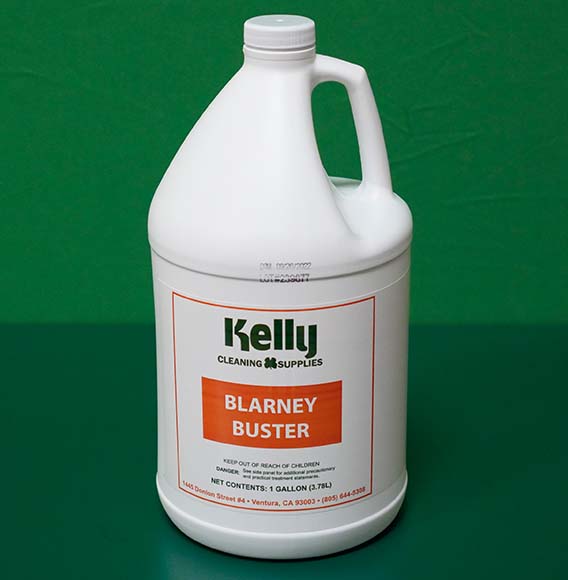
Blarney Buster
0
Price range: $5.40 through $11.70
  • Cuts heavy grease and grime fast
  • Alkaline cleaner for tough messes
  • Safe on most surfaces when diluted
  • Industrial-strength concentrate
Quantity:
Short Description

Blarney Buster is a powerful, industrial-strength alkaline degreaser made to break down heavy grease, stubborn grime, and tough buildup on a wide range of surfaces. Safe for most materials, including stone, painted walls, wood, upholstery, and even carpet – when diluted correctly, it delivers fast, reliable cleaning for kitchens, garages, workshops, and high-demand environments.

Its versatility makes it useful for everything from restaurant cleaning to construction sites and restoration work, giving users a strong, dependable option for handling severe messes without switching between multiple products. Proper dilution is required for sensitive surfaces like paint and upholstery to ensure effective cleaning without over-stripping finishes or causing unnecessary wear.

Type
Heavy-duty alkaline degreaser and multi-surface cleaner
Target Audience
Restaurants, industrial users, janitorial teams, homeowners with heavy messes
Key Features

Breaks down heavy grease, grime, and dirt on most surfaces

Safe for stone, paint, wood, walls, upholstery, and carpets (with proper dilution)

Can be used as a carpet and upholstery pre-spotter (requires rinsing/extraction)

Must be diluted for sensitive surfaces to prevent over-cleaning

Long Description
Blarney Buster is a heavy-duty alkaline degreaser built for situations where standard cleaners aren’t strong enough. Designed for kitchens, garages, workshops, industrial settings, and demanding janitorial environments, this alkaline degreaser cuts through grease and grime quickly so users can restore surfaces without repeated scrubbing or excessive dwell time. It works on stone, painted walls, sealed wood, tile, equipment, and many other hard surfaces, making it a versatile go-to cleaner for teams that need consistent performance across mixed environments.
Common environments where this is used include:
Where this stands out is its ability to handle thick, stubborn buildup that forms in restaurant kitchens, manufacturing areas, or spaces exposed to oil, residue, or heavy particulate soil. The alkaline strength of this alkaline degreaser helps break bonds between the surface and the mess, lifting debris so it can be rinsed away cleanly. This gives cleaning teams faster results with fewer passes, which is especially valuable in commercial settings where cleaning must be efficient and predictable.
Surfaces this alkaline degreaser is commonly used on include:
Because of its strength, dilution matters. On durable surfaces, stronger ratios tackle the heaviest coatings of grease and grime. On more delicate materials, such as paint, certain woods, upholstery, and carpet, This must be diluted to avoid over-stripping or weakening the finish. This flexibility lets users tailor the cleaning strength to each task while maintaining control over how aggressively the alkaline degreaser interacts with the surface.
When dilution is required, it allows safe use on:

For carpet and upholstery, this functions as an effective pre-spotter, breaking up greasy stains and embedded soil before extraction or rinsing. It should not be added to the water tank of an extractor. Instead, it should be applied directly to the stained area and flushed out thoroughly. This targeted approach allows users to remove difficult spots without risking overwetting or fiber damage.

This is also safe for most stone surfaces when diluted properly. This gives it an advantage over acidic cleaners, which would damage or etch those materials. Users managing mixed environments appreciate being able to rely on a single industrial degreaser and alkaline cleaner that handles multiple surfaces safely, as long as dilution and rinsing instructions are followed carefully.

Rinsing is a crucial step in the cleaning process. Alkaline residue that remains on the surface can attract dirt over time, reducing the quality of the clean. A simple wipe-down or rinse removes residue and leaves the surface ready for continued use. This final step ensures long-term cleanliness and prevents the dulling or tackiness sometimes associated with leftover cleaning agents.

Frequently Asked Questions
What types of messes does it handle best?
It’s designed for heavy grease, oil, grime, and thick buildup on walls, floors, kitchen equipment, stone surfaces, and other durable materials. As an alkaline degreaser, it excels at breaking down bonded soils that standard cleaners struggle to remove, including cooking grease, industrial residue, and oily particulate buildup. It works especially well in restaurant kitchens, industrial areas, garages, and high-use spaces where soils accumulate quickly and require a strong alkaline cleaner to lift and rinse away contamination efficiently.
Yes. Proper dilution is essential to both performance and surface safety. Light cleaning tasks call for a milder mixture, while heavy grease and thick buildup may require a stronger ratio. Because this alkaline degreaser is highly concentrated, overuse or incorrect dilution can strip paint, weaken finishes, or cause unnecessary wear. Following the recommended dilution guidelines allows users to match cleaning strength to the task while protecting sensitive materials.
Yes, but only as a pre-spotter. Blarney Buster should be applied directly to greasy or heavily soiled areas, allowed to break down the soil, then thoroughly rinsed or extracted. It should never be added to an extractor tank. When used correctly, this industrial degreaser helps loosen embedded oils and stubborn stains before professional extraction or manual rinsing, improving overall cleaning results without damaging fibers.
Yes. Blarney Buster’s alkaline formula is safe for most stone surfaces when properly diluted, making it a practical alternative to acidic products that could etch or damage stone. This allows users to clean grease and grime from stone floors, counters, and walls without compromising surface integrity. As with any cleaner, testing in a small, inconspicuous area is recommended when working with unfamiliar or sensitive stone.
Rinsing is important because alkaline cleaners can leave behind residue if not fully removed. Any remaining film may attract dirt over time, reducing the quality and longevity of the clean. A thorough wipe-down or fresh-water rinse removes leftover product, prevents buildup, and helps maintain the appearance and performance of the cleaned surface, especially in high-traffic or commercial environments.
You may also like