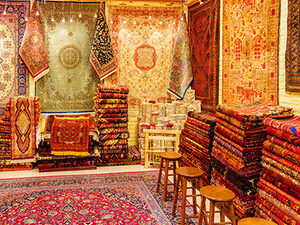
Walk into any home store and you will see rugs that look nothing alike. Some are thick and hand-knotted. Some are thin and reversible. Some are woven by machine in a single afternoon. Knowing the main types of rugs helps you shop smarter, decorate with confidence, and understand why one rug costs a little and another costs a lot.
Rugs are grouped in three main ways:
- By where they are made, such as Persian or Oriental
- By how they are built, such as hand-knotted, tufted, or flatweave
- By what they are made of, such as wool, cotton, natural plant fiber, or synthetic
Below we walk through the most popular types of area rugs and what makes each one distinct.
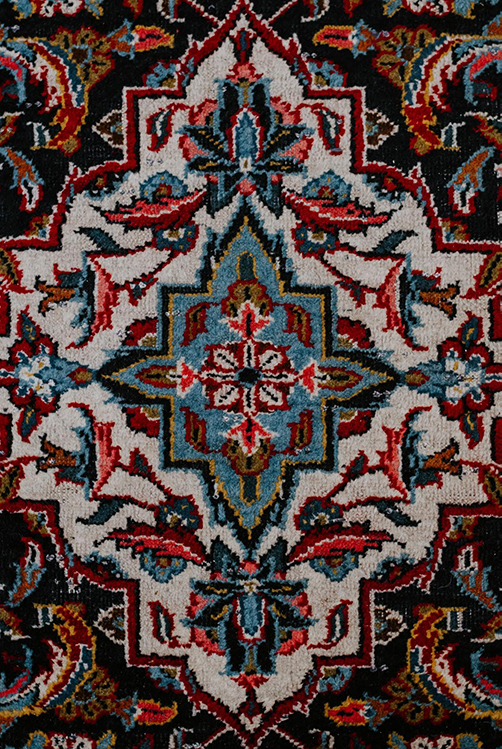
What makes one rug type different from another?
Rugs are made all over the world, often from blends of material. Sometimes two fibers are woven together. Other times one material forms the center and another forms the edge and fringe. A few simple traits tell most types apart:
- Origin: the country or region where the rug is made
- Design: the pattern, medallion, or picture in the rug
- Material: wool, cotton, silk, plant fiber, or man-made fiber
- Construction: whether it is knotted by hand, tufted by machine, or flat woven
Persian rugs: the gold standard
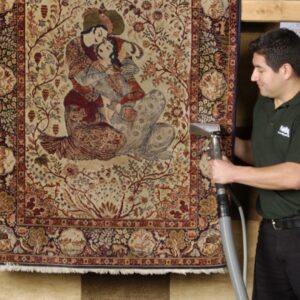
The most well-known rugs are Persian, also called Persian carpets. Persian rugs are almost always made in Iran. They have an intricate pattern and are often seen as the pinnacle of rug making, the gold standard by which other rugs are judged.
- They are usually a mix of wool and cotton, and sometimes silk
- Cotton often forms the underlying structure of the rug
- Wool and silk form the raised surface and the famous pattern
- Styles vary by the city where the rug is made
Fun fact: “The first mention of Persian carpets dates back to around 400 BC” (Persian carpet, 2020).
Oriental rugs: patterns with meaning
Persian rugs are considered the most exquisite, but Oriental rugs are a close contender. While Persian rugs are made only in Iran, Oriental rugs come from a wide area called the “Rug Belt,” which includes Northern Africa, the Middle East, Central Asia, and parts of Southern and Northern Asia (Oriental rug, 2020).
- They are typically made of wool, cotton, and sometimes silk
- Designs usually have a medallion in the middle framed by several borders
- The pictures often carry meaning, such as religious images, the maker’s signature, or a date
Fun fact: “The oldest preserved rug, called the Pazyryk carpet, dates back to around 500 BC” (Oriental rug, 2020).
Hand-knotted versus tufted rugs
Two rugs can share a look yet be built in very different ways. Construction is one of the biggest things that separates rug types.
Hand-knotted rugs are tied one knot at a time by a weaver, which is why Persian and many Oriental rugs take months to finish. Tufted rugs are made a faster way:
- Yarn is looped through a backing with a machine, then the loops are cut for an even surface
- This makes tufted rugs less expensive and easy to shape into fun designs
- Some hobbyists even use hand-held tufting guns at home
- The yarn is glued to a second backing, so tufted rugs can pull apart at the seams over time
Because tufted rugs are built on glue and backing much like wall-to-wall carpet, they respond to care in a similar way. If you also have carpet at home, our team handles both through our carpet cleaning service.
Flatweave rugs and Dhurries
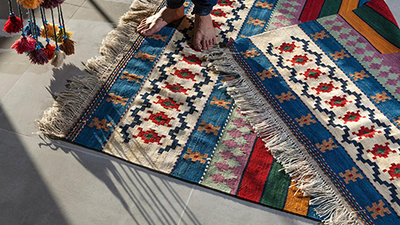
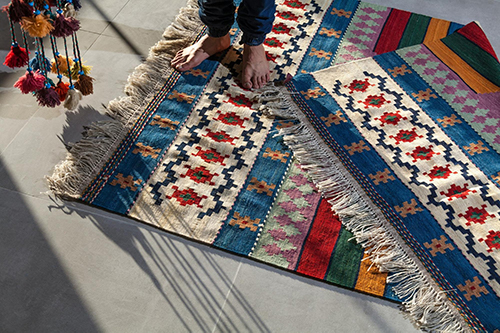
Flatweave rugs have no thick pile. Instead the yarn is woven flat, which makes them thin, light, and easy to move. Dhurries are a popular flatweave style.
- Dhurries are made in India and South Asia
- They are typically woven from silk, cotton, wool, or jute (a coarse plant fiber used for burlap and rope)
- Because of the weave, they show the same pattern on both sides
- You can flip a Dhurrie over when one side wears out
Flatweave rugs are colorful and often inexpensive, which is why they show up in busy rooms across Santa Barbara. When one needs a refresh, our Santa Barbara rug cleaning team can treat both sides safely.
Natural fiber rugs, including Haitian cotton
Natural fiber rugs are made from plant materials such as cotton, jute, sisal, and seagrass. They bring a warm, earthy look. One local favorite is Haitian cotton, which is surprisingly common here in Ventura County.
- Haitian cotton is not fully processed, so bits of seed and plant material stay in the fibers (Haddad’s Rug Company, n.d.)
- Because of that, these rugs are usually left in natural white, yellow, or brown shades
- The leftover seeds can release a brown dye when wet, so cleaning takes special care
For that reason many local owners rely on professional help through our Ventura rug cleaning team rather than risk a stain at home.
Synthetic rugs
Synthetic rugs are made from man-made fibers such as nylon, polyester, or polypropylene. They are the everyday workhorse of the rug world.
- They cost less than wool or silk rugs
- They resist stains and hold color well
- They stand up to kids, pets, and heavy foot traffic
- They come in almost any color or pattern
Synthetic rugs are a smart pick for busy homes and rentals around Thousand Oaks. When they get grimy, our Thousand Oaks rug cleaning service can freshen them up.
How does rug type change the care it needs?
The type of rug you own decides how it should be cleaned. A hand-knotted wool Persian rug is treated very differently from a glued tufted rug or a plant-fiber piece. A few general points:
- Fine wool and silk rugs, like Persian and Oriental, deserve gentle professional cleaning
- Tufted rugs need care that will not weaken the glue and backing
- Natural fiber rugs like Haitian cotton can stain if soaked the wrong way
- Rugs in high-traffic areas need cleaning more often than the label suggests
The safest move is to match the cleaning method to the exact type of rug you own.
Find the right care for your type of rug
Once you know which of the types of rugs you own, the next step is keeping it beautiful for years to come. In short:
- Identify your rug by its origin, design, material, and construction
- Match the cleaning method to that type
- Trust delicate and valuable rugs to trained hands
Kelly Cleaning has the knowledge, skill, and technology to pamper every kind of rug and give it the attention it deserves. Learn more about our rug cleaning service for Ventura and Santa Barbara counties, or call (805) 644-5308.
References
Amirkhan, E., & Groseclose, A. (2010). A Comprehensive Guide to Oriental & Specialty Rug Cleaning (2nd ed.). Master Rug Cleaner, LLC.
Haddad’s Rug Company. (n.d.). Haitian Cotton. Haddad’s Rug Company.
Oriental rug. (2020). Retrieved from Wikipedia.
Persian carpet. (2020). Retrieved from Wikipedia.
Schwartz, O. (2020). 6 Modern Rug Trends to Watch in 2020. Nazmiyal Collection.