
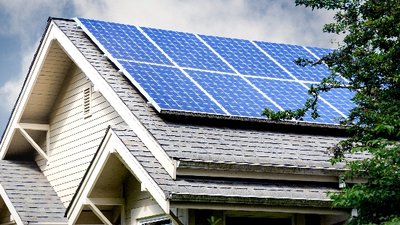
You paid good money for your solar panels, so a fair question comes up fast: do solar panels need to be cleaned, or do they just take care of themselves? The short answer is yes, they do need cleaning, and the reason is simple. Solar panels make power from sunlight. Anything that blocks that sunlight, like dust, pollen, or bird droppings, cuts into the energy your panels produce. Here in Ventura County, the local weather makes that buildup worse than you might think.
This post is about the “why” behind panel cleaning. We will keep the how-to steps and the how-often schedule short and point you to more detail. Our goal here is to help you understand what dirt does to your system and how to tell when it is time to act.
So, Do Solar Panels Really Need Cleaning?
Rain helps, but it does not do the whole job. A light rain often leaves a muddy film behind once it dries. That film keeps blocking sunlight until something washes it away for real. So while your panels are not high-maintenance, they are not maintenance-free either.
Here is the core idea in plain terms:
- Panels turn sunlight into electricity, so shade of any kind lowers output.
- Dust, soot, pollen, and droppings all act like a thin shade over the glass.
- Rain rinses some grime but often leaves a dried film that keeps blocking light.
- Clean glass lets your system run closer to the output you paid for.
How Dirt, Dust, and Bird Droppings Cut Your Output
Ventura County throws a lot at rooftop panels. Our area sees wildfires, high winds, blowing dust, and salty sea spray near the coast. Each one leaves a layer on the glass. Over time those layers add up and your panels quietly make less power.
The numbers matter here. Debris on the glass can reduce a panel’s energy output from 5 percent to as much as 20 percent. That may not sound huge on any single day, but it stacks up over the life of the system. Lost production over 20 years can add up to roughly 9,800 dollars in value you never collected.
Different types of grime cause trouble in different ways:
- Dust and pollen spread a thin, even haze across the whole panel.
- Bird droppings and leaves create hard spots that block light in one area.
- Ash and soot from wildfire season settle in a sticky, hard-to-rinse layer.
- Sea spray near the coast leaves salt that dries and clings to the glass.
A blocked spot can drag down more than its own little square. Panels are wired so that one shaded cell can hold back the ones around it. That is why even a few stubborn droppings are worth removing.
When Cleaning Matters Most
Not every month is equal. Some stretches of the year and some rooftops build up grime much faster. Cleaning pays off most in these cases:
- During our long dry season, when little to no rain falls for months.
- Right after wildfire smoke or heavy ash has settled in the area.
- If you live near the coast and get regular salt spray.
- If your panels sit at a low, nearly flat angle, since flat glass holds more grime.
- If tall trees or nearby birds leave steady debris on the roof.
Roof grime rarely travels alone. The same dust and leaves that dull your panels tend to clog nearby systems too. If you are already having your gutter cleaning handled, panel care is a natural add-on to the same visit. Many homeowners bundle it with their window cleaning so the whole exterior gets attention at once.
Signs Your Solar Panels Need a Cleaning
You do not need special tools to spot most warning signs. A quick look and a glance at your app usually tell the story. Watch for these:
- Your energy output drops even though the days are sunny and long.
- You can see a dull haze, streaks, or spots on the glass from the ground.
- Visible bird droppings, leaves, or ash are sitting on the panels.
- It has been a long, dry stretch with no real rain to rinse things off.
- A recent fire or dust storm left a film on everything around your home.
If you notice a few of these at once, your panels are likely due. Catching it early keeps small losses from turning into a full season of weak output.
A Quick Word on How Often and How to Clean
Frequency and method are their own topics, so we will keep this short. As a rule of thumb, most Ventura County homes do well with a yearly cleaning, with an extra pass after wildfire season or a big dust event. The right schedule depends on where you live and what lands on your roof.
Method matters just as much as timing. Solar glass scratches, and rooftops are risky to walk. Do-it-yourself cleaning is not worth the danger for most people, and it is easy to void a warranty with the wrong soap or a harsh scrubber. A trained crew brings the right water, soft tools, and fall protection.
A few things to keep in mind:
- Yearly is a solid baseline for most local homes.
- Add a cleaning after heavy smoke, ash, or a dust storm.
- Skip harsh chemicals and stiff brushes that can scratch the glass.
- Leave steep or high roofs to a crew with proper safety gear.
The Bottom Line on Solar Panel Cleaning
So, do solar panels need to be cleaned? Yes, and skipping it quietly costs you money every sunny day. Here is the short version:
- Dirt, ash, and droppings can cut output by 5 to 20 percent.
- That lost power can add up to thousands of dollars over the years.
- Sunny days with low output are your cue to book a cleaning.
Kelly Cleaning has served homes and businesses across Ventura County and the wider region since 1978. If you are ready to get your panels back to full strength, learn more about our solar panel cleaning service for Ventura and Santa Barbara counties, see the full range of cleaning services we offer here, or find us in Ventura. To book a visit, or call (805) 644-5308.